


FETAL MEDICINE
Combining medical expertise with a holistic approach throughout your maternity journey.
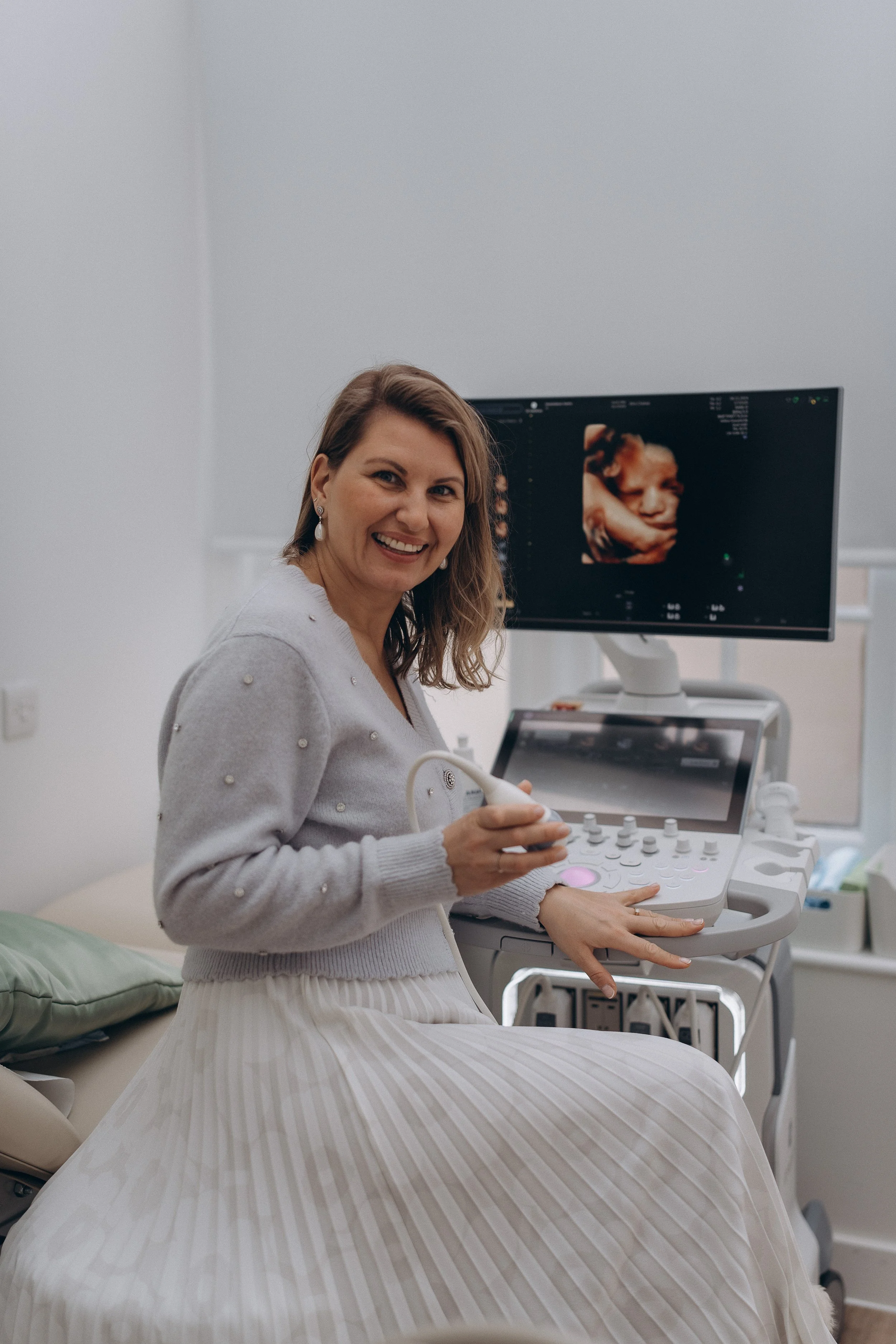
Ultrasound plays a central role in monitoring your baby’s well-being, from early detection of a heartbeat to assessment of genetic risks, detailed morphology scans, routine growth assessments, and post-dates evaluations to determine the safety of awaiting spontaneous labour.
All scans at BLISS are performed by Fetal Medicine Specialists, ensuring the highest level of clinical expertise, alongside a one-stop service where scanning and counselling are provided in a single visit. This approach allows for immediate interpretation, personalised guidance, and reassurance without the need for additional appointments.
We offer a range of services, including one-off reassurance scans, second opinion scans, and comprehensive ultrasound packages covering multiple stages of pregnancy.These options are designed to meet varying clinical needs and levels of reassurance, supporting a safe and informed pregnancy journey.
Our services are available to all women wishing to enhance their NHS or private care with specialist-led fetal medicine ultrasound.

Ultrasound Packages
Our ultrasound packages are designed for those seeking continuity of care through multiple scans, with a range of options available depending on the level of care required and desired. These packages are suitable for both NHS and private patients and are performed exclusively by Fetal Medicine Consultants.
Discounted ultrasound packages are available to those seeking to supplement NHS or private maternity care.
All packages are bookable from 12 weeks gestation and can be purchased directly at BLISS Chelsea Clinic. Packages are bundled for cost efficiency, and refunds are only available under exceptional circumstances.
For guidance on the most suitable option, our Fetal Medicine Consultant and Clinical Lead, Dr. Peeva, is available for in-person consultations to provide expert advice tailored to your pregnancy.
At BLISS, we combine specialist expertise, continuity of care, and personalised support to ensure both you and your baby receive the safest, most comprehensive care throughout pregnancy.
Types of Fetal Scans
At BLISS Chelsea Clinic, all ultrasound examinations are performed exclusively by highly experienced Fetal Medicine Consultants - specialists with advanced expertise in pregnancy ultrasound and maternal-fetal health.
This ensures that every patient receives expert, evidence-based care and the highest level of continuity throughout their journey. From your very first scan, you will be assessed, counselled, and guided by the same consultant, offering a seamless and personalised experience.
Unlike many other clinics, at BLISS you will not be left waiting or referred elsewhere for results or explanations. Every scan is fully interpreted and discussed with you immediately, giving you clear understanding, reassurance, and the opportunity to ask questions in a supportive environment.
Our one-stop approach means that you are scanned and counselled by the same expert thus eliminating the anxiety of waiting for second opinions or additional appointments. Whether your visit is for reassurance, a routine check, or a complex evaluation, you can feel confident that your care is in the hands of specialists dedicated to both clinical excellence and compassionate communication.
At BLISS, we believe that knowledge, clarity, and continuity are the foundations of exceptional care: ensuring that you and your baby receive the attention, expertise, and peace of mind you deserve.
-
The nuchal scan is an important part of your first-trimester assessment, performed between 11 and 13 weeks of pregnancy.
At this stage, your baby’s head, body, limbs, and major organs - such as the brain, heart, and kidneys - can already be visualised and carefully examined for early structural development.If your pregnancy is spontaneous (natural), we will also date the pregnancy according to your baby’s size and provide an accurate estimated due date.
A key part of this scan is measuring the nuchal translucency (NT) - a small fluid space at the back of the baby’s neck. This measurement helps assess the risk of chromosomal and genetic conditions such as Down syndrome, as well as potential heart abnormalities.
Even if you have already had a non-invasive prenatal test (NIPT) such as Harmony or Panorama, the NT scan remains important, as it provides additional structural and anatomical information about your baby that NIPT cannot detect.
As part of this scan, we will also assess your individualised risk for preeclampsia and fetal growth restriction, giving the opportunity to introduce preventative measures early to help support a healthy pregnancy outcome.
-
The anomaly scan, also known as the morphology scan, is a detailed ultrasound examination that assesses your baby’s development and checks for any congenital abnormalities such as spina bifida or heart and brain conditions.
During this scan, we carefully evaluate your baby’s anatomy and growth, as well as the position of the placenta and the amount of amniotic fluid surrounding your baby.
The optimal time to perform a routine anomaly scan is from 20 weeks onwards, when your baby’s brain, heart, and other organs are more developed and can be thoroughly assessed.
However, many significant structural abnormalities can already be detected from 16 weeks, and an early anomaly scan (16–18 weeks) may be recommended in certain situations — or simply offered for added reassurance.
As part of this scan, we will also assess your risk for preeclampsia and preterm birth, providing early insights to support your pregnancy and overall well-being.
-
The anomaly scan, also known as the morphology scan, is a detailed ultrasound examination that assesses your baby’s development and checks for any congenital abnormalities such as spina bifida or heart and brain conditions.
During this scan, we carefully evaluate your baby’s anatomy and growth, as well as the position of the placenta and the amount of amniotic fluid surrounding your baby.
The optimal time to perform a routine anomaly scan is from 20 weeks onwards, when your baby’s brain, heart, and other organs are more developed and can be thoroughly assessed.
However, many significant structural abnormalities can already be detected from 16 weeks, and an early anomaly scan (16–18 weeks) may be recommended in certain situations or simply offered for added reassurance.
As part of this scan, we will also assess your risk for preeclampsia and preterm birth, providing early insights to support your pregnancy and overall well-being.
-
The growth scan provides important information about your baby’s development and well-being in the later stages of pregnancy.
During this scan, we measure your baby’s head, abdomen, and thigh bone to calculate an estimated fetal weight (EFW). We also assess the position and maturity of the placenta, the amount of amniotic fluid, your baby’s movements, and the blood flow from the placenta to your baby.
The estimated fetal weight helps indicate how your baby is growing, offering insights into whether your baby’s size is within the expected range for your stage of pregnancy. It also helps identify babies who may be smaller or larger than expected, allowing early monitoring and care planning.
Growth scans are typically performed at 28, 32, and 36 weeks, though the exact timing may vary depending on your baby’s growth pattern and any pregnancy complications, such as high blood pressure or diabetes.
-
Measuring the length of the cervix during pregnancy helps identify women who may be at increased risk of preterm (premature) birth.
This scan is performed internally (transvaginally) for optimal accuracy and provides valuable information about the likelihood of early labour.
A cervical length scan is usually performed at around 20 weeks of pregnancy, or earlier in the first trimester if you have experienced a previous preterm delivery or undergone a procedure on your cervix, such as LLETZ or cone biopsy. Early detection allows your healthcare team to offer preventative measures and closer monitoring to help support a healthy, full-term pregnancy.
-
At BLISS Chelsea Clinic, we specialise in the care and monitoring of multiple pregnancies. Our consultant, Dr. Peeva, has extensive experience in this field, including research and a dissertation on complicated multiple pregnancies, ensuring expert guidance at every stage.
Each scan includes a detailed assessment of:
Fetal growth and any size discrepancy between your babies
Amniotic fluid levels around each baby
Blood flow from the placenta to your babies
For identical twins, these scans are particularly important to screen for unique complications, such as Twin-to-Twin Transfusion Syndrome (TTTS) and Twin Anaemia Polycythaemia Sequence (TAPS).
-
A post-dates scan is performed when your pregnancy has passed your estimated due date. Its purpose is to ensure that both you and your baby are safe and to assess whether it is still appropriate to wait for labour to start naturally.
During this scan, we carefully evaluate:
Placental function and maturity
Amniotic fluid levels
Fetal movements and well-being
Blood flow from the placenta to your baby
In some cases, the scan may be combined with computerised CTG (Cardiotocography) to assess your baby’s risk of chronic hypoxia, providing additional reassurance about oxygenation and overall fetal health.
-
For women planning a vaginal birth after cesarean (VBAC), a VBAC evaluation scan helps assess the thickness of the previous C-section scar and estimate the individualised risk of uterine rupture — a rare complication occurring in about 1% of cases.
This scan is usually performed around 36 weeks and includes growth assessment of your baby and transvaginal evaluation of the myometrium (muscle) thickness at the scar site.
The scan can identify women for whom attempting VBAC may not be recommended. While it provides valuable guidance, continuous monitoring during labour remains essential, as it cannot guarantee prevention of rupture, only assess suitability for attempting a VBAC.
-
The Fit to Fly scan is offered for peace of mind for women planning a flight or trip during pregnancy.
This scan includes:
Transvaginal cervical length measurement to assess the risk of spontaneous preterm birth
Placental position and function
Estimated fetal weight and overall well-being of your baby
A Fit to Fly letter for your airline or travel company can be provided upon request, giving official reassurance for your travel plans.